Research
Molecular Adaptations Underlying Extreme Cardiac Phenotypes in Nature
Nature is a constant source of inspiration for our team. Evolution has been running experiments for millions of years, enabling animals to adapt to unique ecological niches and with fascinating physiological traits that help them thrive in environments that would be cause disease in humans. The molecular mechanisms underlying most extreme physiological adaptations in the animal kingdom have not been investigated. We study these non-traditional model organisms to gain insight into fundamental biology and to potentially reveal therapeutic targets or strategies for preventing human diseases. Some of the questions were are interested in are listed below:
How does the python heart rapidly remodel to meet the extreme metabolic demands associated with digesting large prey?
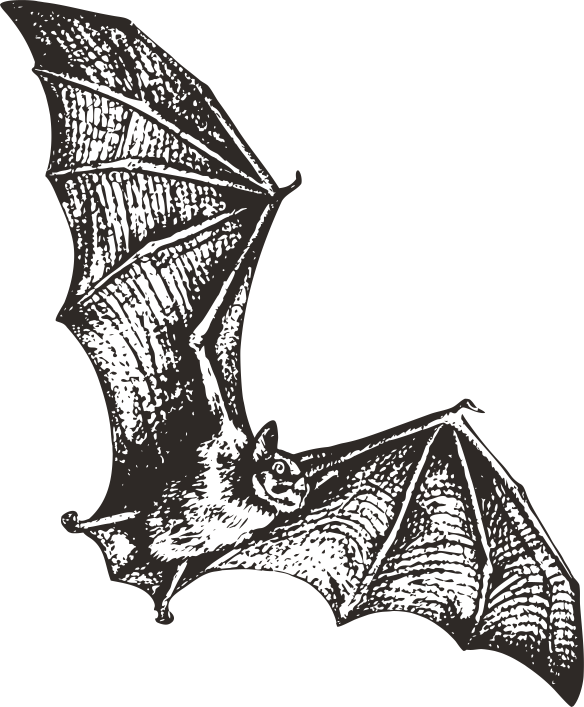
How are the hearts of bats protected against the routine extreme cardiac stress associated with powered flight?
Why don’t giraffes get heart failure with chronic hypertension?
Causes and Consequences of Dysregulated Alternative Splicing in Heart Failure
The human genome contains approximately 20,000 protein-coding genes, but the proteome displays up to an order of magnitude more distinct protein isoforms. The reason for this is alternative splicing, an RNA processing mechanism that allows a single gene to code for multiple proteins by joining coding segments (exons) together in different combinations. Many protein isoforms produced from the same gene form distinct protein interaction networks and have unique functions. Dysregulated alternative splicing is a feature of human heart failure, but the causes and cellular consequences of most disease-associated splicing changes are not understood. We are interested in identifying how alternative splicing enables specialized cardiac functions in healthy settings and how this is disrupted in heart failure. Here are a few of the questions we are studying:
How does alternative splicing in heart failure impact cardiomyocyte protein interaction networks?
Are disease-associated splicing changes a cause or consequence of heart failure?
Are splicing changes uniform across the myocardium in heart failure or are there cell type- or region-specific differences?

